

Is an electric adjustable desk a waste of money?
The so-called "IQ tax" occurs when businesses exploit information asymmetry to package low-cost products at high prices, or use high-sounding concepts to package useless products. In simple terms, it's a waste of money. So, are electric adjustable desks and ergonomic chairs really a waste of money?
1. Why does prolonged sitting cause fatigue or "sitting illness"?
When we stand correctly, the spine forms four physiological curves, as shown in the diagram below. This position creates the most relaxation, as the forces acting on the spine are relatively balanced, with pressure being moderate across all parts. The lumbar spine is the backbone of the spine, playing a crucial role in supporting the weight of the upper body and maintaining balance.
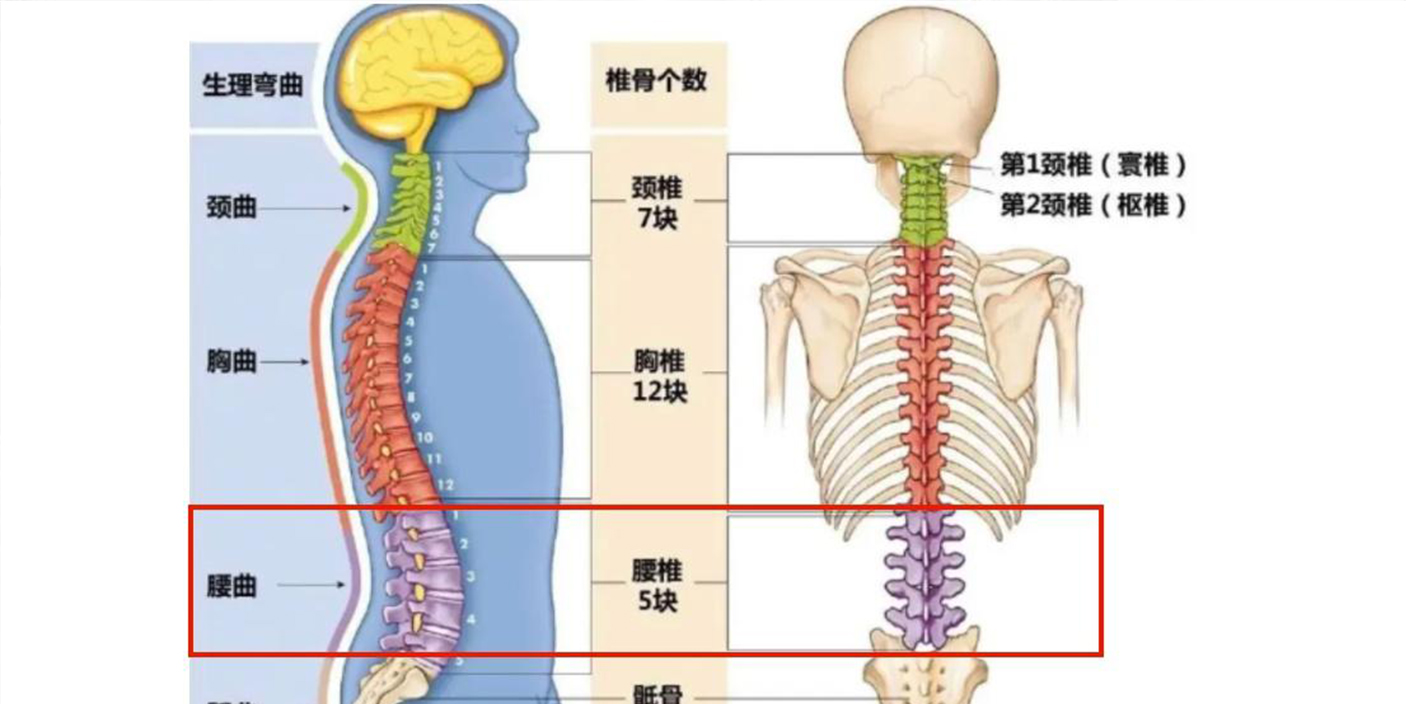
However, when we sit, this equilibrium is disrupted. Prolonged sitting combined with incorrect posture can put pressure on the lumbar spine and spinal column. When sitting, the pelvis unconsciously tilts backward, shifting the lumbar and sacral curves from their normal S-shaped shape to an arch. This compresses and rubs the intervertebral discs in the lumbar spine, pushing them outward. Over time, this condition, known as a herniated lumbar disc, can result.
Seeing this, some might say, "Well, if I just stand at my desk, wouldn't that solve the problem?" Simply put, neither standing nor sitting for extended periods can solve this problem. The only solution is an ergonomic standing desk combined with an ergonomic chair.
2. Why an ergonomic standing desk is necessary
The core value of an ergonomic height adjustable desk is that it allows you to easily switch between sitting and standing positions. It breaks up the static state and increases physical activity (even minor activities like shifting your center of gravity or pacing), which improves circulation and metabolism.
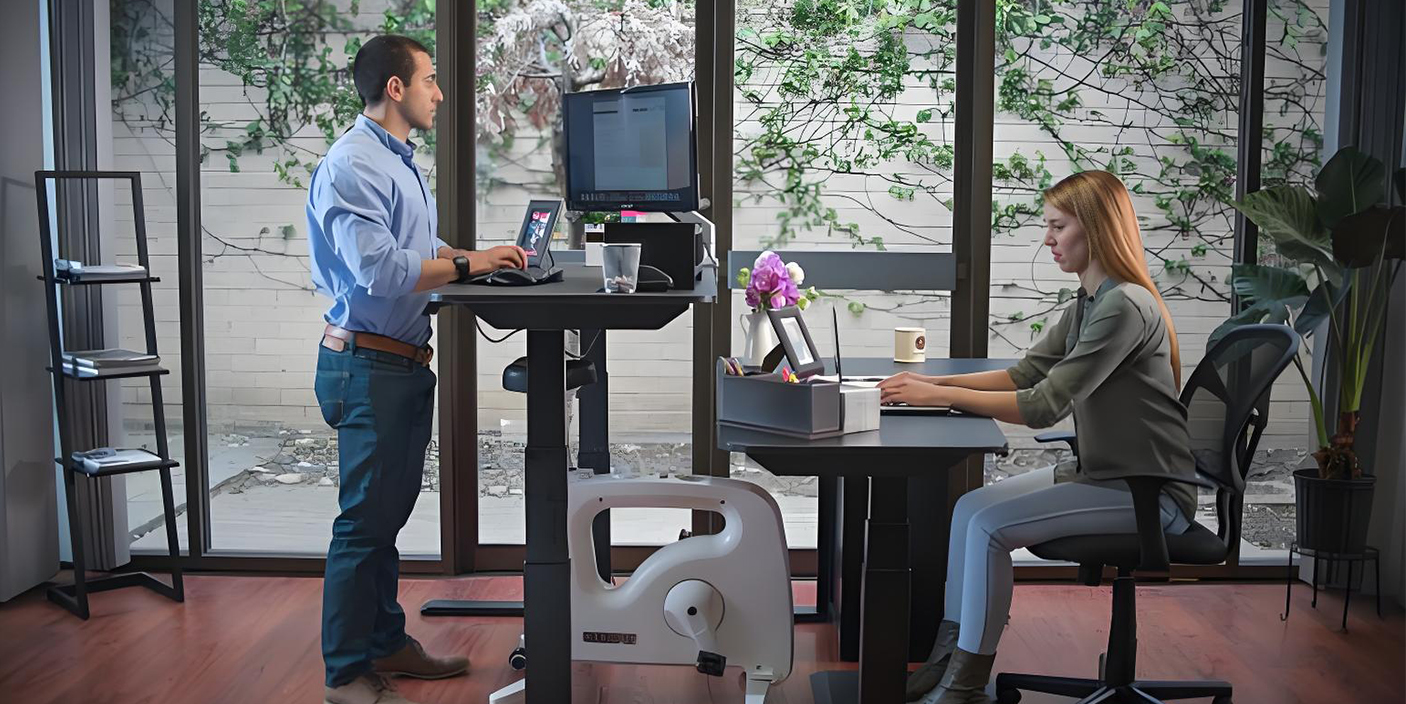
When standing, the body's weight is primarily borne by the feet and legs, relieving constant pressure on the hips, sciatic nerve, and lower back. This helps improve blood circulation in the lower body, reduces numbness and swelling, and reduces the risk of related health problems.
Standing naturally relieves some pressure on the lumbar discs and encourages the core muscles to engage slightly for balance. By alternating between sitting and standing, the lower back muscles are relaxed and activated, effectively alleviating and preventing lower back pain caused by prolonged sitting.
3. Why do you need an ergonomic chair?
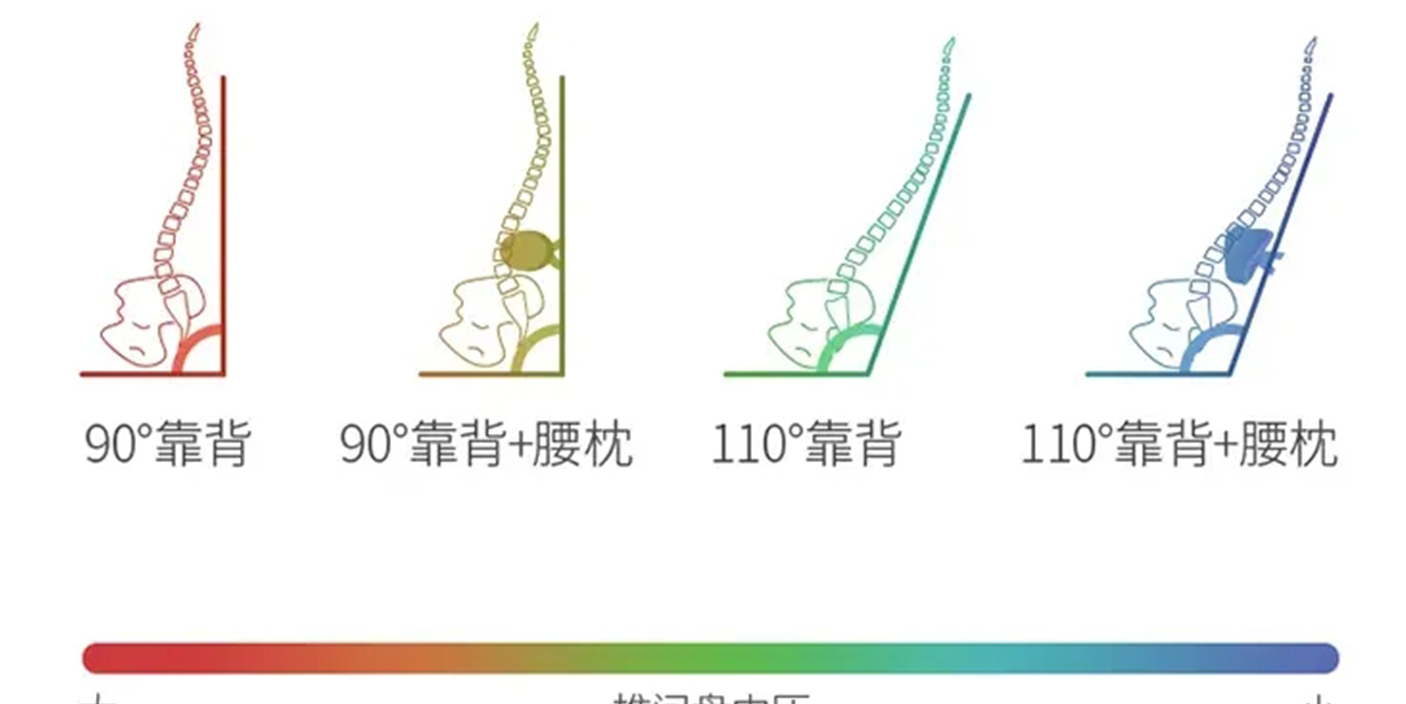
First, an ergonomic chair can adjust the backrest angle to position your pelvis in a relatively neutral position, allowing you to sit reclined.
Second, the lumbar support, backrest, and neck pillow of an ergonomic chair provide support for the lumbar, thoracic, and cervical vertebrae, respectively, restoring the spine's normal curvature and reducing stress on the entire spine. Secondly, since approximately 75% of the body's weight rests on the seat, the remaining pressure is distributed across the legs. Most of the pressure on the seat is concentrated on the coccyx.
Thus, an ergonomic chair distributes pressure between the coccyx and legs by increasing the contact area between the hips and legs, further reducing spinal pressure and making sitting more comfortable.
An ergonomic chair, ultimately, is a comprehensive support system for the neck, shoulders, back, waist, hips, and legs. It helps you easily maintain correct sitting posture, maintain the normal curvature of the spine, relieve spinal pressure, and reduce the risk of pain. In short, it means more comfortable sitting.
If ergonomic chairs optimize sitting comfort and health through sophisticated support systems, then ergonomic standing desks fundamentally break the "sitting" habit by providing convenient sit-stand transitions. They:
Counteract the systemic health risks (cardiovascular, metabolic, and other) associated with prolonged sitting.
Relieve pressure on the hips, sciatic nerve, and lower extremities, improving circulation.
Dynamically relieve lower back muscle fatigue and pain.
Facilitate postural changes, boosting energy and focus.
Thus, an ergonomic standing desk doesn't simply allow you to "stand while working"; it offers a "dynamic and static" work style. It needs to be used in conjunction with an ergonomic chair (standing when sitting tires, sitting when standing tires), and combined with proper sitting and standing posture adjustments (and anti-fatigue mats) to maximize its health benefits, creating a dynamic work environment that better aligns with the body's natural movement needs.
4. Why are ergonomic desks and chairs so expensive? Many people have heard that ergonomic desks and chairs are very comfortable to sit on, so they also want to buy a set, but when they see the price, they are shocked! Why are they so expensive? No matter how comfortable they are, isn’t it just a desk and a chair? How can they be sold for thousands of dollars? As a manufacturer of adjustable ergonomic desks, we have summarized the following points:
(1) R&D costs
In the early stages of a product, the most important thing is the R&D cost. Take Herman Miller’s Aeron, the “most comfortable chair in the world”, for example. The design and development process of the chair took seven or eight years. After the product is released, it must pass a large number of tests on people of different heights and weights, and then iterate continuously, striving to make a good product that can adapt to everyone. This is the soul of ergonomic desks and ergonomic chairs. Many adjustable ergonomic desk factories and ergonomic office chair factories in China can only produce 1-2 new products each year. Some even take longer to polish a new product. Even so, the products they produce are still not perfectly suitable for everyone. Not to mention other manufacturers who have not updated their products for many years or are frantically updating their products with OEM products. Therefore, the manpower, material resources, financial resources, and time spent on R&D have a great impact on the cost.
(2) Material cost
Material cost is easy to understand. The material cost of ergonomic chairs is mainly the mesh, chassis, and frame. The better these parts are, the higher the price will be. The material cost of ergonomic desks is mainly the desk frame.
Secondly, it can be roughly judged by the net weight of the standing desk, the completeness of the delivery, the promised warranty period, etc.
The heavier the standing desk, the more solid the frame material; the more complete the door-to-door delivery, the fewer steps you need to install yourself, and the better the workmanship; the longer the warranty period the manufacturer dares to promise, the more confident they are in the quality of their products.
(3) Promotion and marketing cost
After research and development, it is of course sold, and selling also requires money. In this regard, imported brands account for a relatively small proportion, and more are new domestic products. The proportion of promotion and marketing costs is not less than the previous factor, but the profit of low-priced products is not high, mainly relying on volume.